Rubber Process Oil (RPO) - Iranol About
Iranol Rubber Process Oil (RPO) is a petroleum-derived hydrocarbon oil specially formulated for use in rubber compounding and processing industries. It is produced during refining of crude oil and contains a balanced composition of aromatic, naphthenic, and paraffinic hydrocarbons.
It is typically a light yellow to dark brown liquid with moderate viscosity and excellent compatibility with rubber polymers.
Iranol RPO (especially aromatic grade) is widely used as a processing aid, plasticizer, and extender oil to improve the workability, dispersion, and physical performance of rubber compounds.
It is added during mixing (often 3040 phr in rubber formulations) to optimize processing and cost efficiency.
2. Key Specifications (Typical Iranol Aromatic Grade)
| Property |
Typical Value |
Test Method |
| Kinematic Viscosity @100C |
35 cSt |
ASTM D-445 |
| Flash Point |
264C |
ASTM D-92 |
| Pour Point |
15C |
ASTM D-97 |
| Specific Gravity @15.6C |
0.995 |
ASTM D-4052 |
| Aniline Point |
45C |
IP-2 |
| Sulfur Content |
3.5 wt% |
ASTM D-2622 |
| Ash Content |
0.02 wt% |
ASTM D-482 |
| VGC (Viscosity Gravity Constant) |
0.925 |
ASTM D-2501 |
| PCA Content |
<3% (low aromatic toxicity) |
|
General RPO specs range:
- Density: 0.921.05
- Flash point: >220C
- Viscosity: 4090 cSt (depending on grade)
3. Types of Rubber Process Oil
- Aromatic RPO (Iranol main grade)
- High solvency
- Best for tires, black rubber products
- Paraffinic RPO
- Light color, high stability
- Used in EPDM, butyl rubber
- Naphthenic RPO
- Balanced properties
- Used in footwear, molded goods
4. Applications of Iranol RPO
Iranol RPO is widely used in:
Rubber & Tire Industry
- Automobile tires & tubes
- Conveyor belts
- Rubber sheets & mats
- Automotive rubber parts
Industrial Products
- Hoses, cables & insulation
- Footwear & molded goods
- Rubber shock absorbers
Chemical & Auxiliary Uses
- Adhesives & sealants
- Carbon black processing
- Ink & polish manufacturing
5. Functions of RPO in Rubber
1. Plasticizer
- Softens rubber compound
- Improves flexibility
2. Processing Aid
- Enhances mixing efficiency
- Reduces internal friction
3. Filler Dispersant
- Ensures uniform distribution of carbon black & fillers
- Improves compound homogeneity
4. Extender Oil
- Reduces cost of formulation
- Maintains volume without sacrificing performance
5. Flow Improver
- Improves moldability & extrusion
- Enhances processability
6. Benefits of Iranol RPO
Technical Benefits
- Excellent compatibility with elastomers
- Improved vulcanization properties
- Better dispersion of fillers
- Enhanced elasticity and flexibility
Processing Benefits
- Easier mixing and handling
- Improved flow during extrusion & molding
- Reduced energy consumption
Economic Benefits
- Lower raw material cost (extender effect)
- Increased production efficiency
Environmental Advantage (Iranol)
- Low PCA content (<3%) safer than traditional aromatic oils
7. Summary
Iranol Rubber Process Oil (RPO) is a critical ingredient in rubber manufacturing, acting as a plasticizer, processing aid, and cost reducer. Its balanced chemical composition improves processing efficiency, product quality, and economic viability, making it widely used in tire, automotive, and industrial rubber applications.
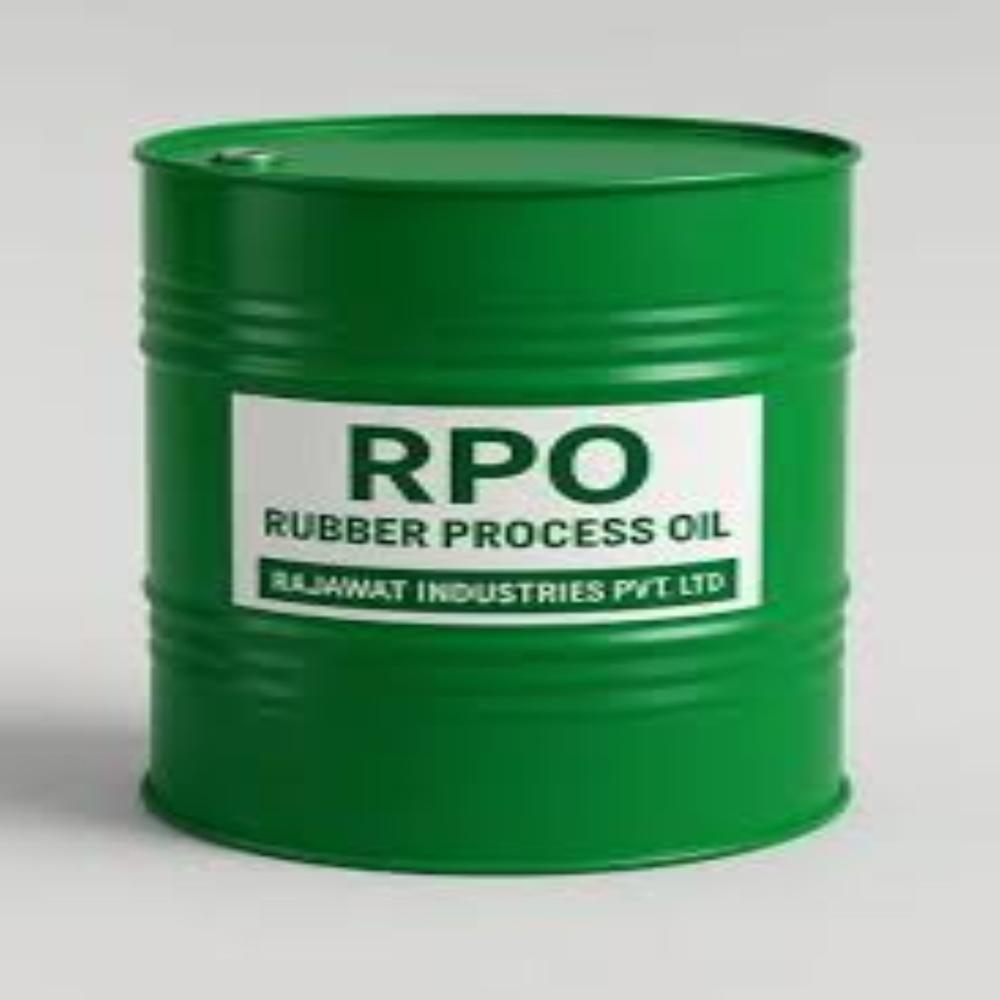
Premium Quality for Rubber & Tire IndustryIranol Rubber Process Oil is engineered to meet the demanding requirements of the rubber and tire manufacturing sectors. Its optimal viscosity and non-smelling composition ensure excellent processability and product finish. Used extensively in molding, compounding, and tire production, it offers consistency in performance and compatibility with diverse elastomers.
Versatile Applications Across Industrial ProductsWith a density range of 0.92-1.05 kg/L and dark green appearance, Iranol RPO is suitable for multiple industrial applications, particularly in the automotive sector. It can be effectively used in various vehicles and caters to the needs of large-scale tire and rubber goods producers. The oil's compatibility and packaging make it convenient for both bulk and smaller manufacturers.
FAQ's of Rubber Process Oil (RPO) - Iranol:
Q: How is Iranol Rubber Process Oil used in the rubber and tire industry?
A: Iranol RPO acts as a plasticizer and processing aid, improving the workability of rubber compounds during molding and extrusion. It helps achieve uniform mixing, enhances processing efficiency, and contributes to the flexibility and durability of finished tires or rubber products.
Q: What benefits does Iranol RPO provide compared to other process oils?
A: Iranol RPO features a stable viscosity of ~35 cSt, non-smelling composition, and low ash content, ensuring a cleaner process and superior rubber properties. Its dark green color and consistent density further support high-quality outputs, making it particularly reliable for demanding industrial standards.
Q: When should Iranol RPO be added during the manufacturing process?
A: Iranol RPO is typically incorporated during the initial mixing stage of rubber compounding. This allows the oil to blend thoroughly with rubbers and other additives, improving processability and ensuring a smooth extrusion or molding operation.
Q: Where can I procure Iranol Rubber Process Oil in India?
A: Iranol RPO is available through authorized distributors, manufacturers, suppliers, and traders across India. The product is offered in standardized drum or barrel packaging, ensuring safe delivery and handling for industrial clients.
Q: What process is followed for packaging and transporting Iranol RPO?
A: Iranol RPO is packed in robust 180 kg drums or barrels to maintain product integrity during shipping and storage. The secure sealing and non-hazardous nature of the oil make it safe for handling and long-distance transportation within India.
Q: Can Iranol RPO be used in products for all types of vehicles?
A: Yes, Iranol RPO is formulated to suit a wide range of vehicles, including scooters, motorcycles, cars, and heavy vehicles. Its chemical stability and lubricating properties ensure optimal performance in tire and other rubberized auto components.






 Send Inquiry

 Send Inquiry